Continuing our AI Hackathon blog series featuring winning and standout ideas, this edition highlights Liane Christopher and her innovative concept, which ranked among the hackathon’s top-scoring ideas.
When I started working on my hackathon idea, I was not trying to build a transformation engine. I wanted to tackle a much earlier and often overlooked part of modernization: understanding what has changed between two versions of a data structure and making that review easier to manage.
That became Sky Health Bridge, a lightweight workbench designed around synthetic health data. At its core, it compares two JSON structures and identifies fields that have been added, removed, or modified. It then organizes those changes, highlights potential risks, and provides draft mapping recommendations for a human reviewer to validate.
The problem may sound straightforward, but anyone who has worked through data dictionaries, spreadsheets, and multiple versions of mapping documents knows how quickly the process can become time-consuming. Finding a small structural change manually can take hours. Keeping track of what changed, what it means, and who needs to make the final decision adds another layer of complexity.
That was the moment when the idea really clicked for me. During the hackathon, the comparison engine surfaced a tiny structural change that could easily have taken a person hours to find. With some refinement of the prompts, the solution became viable very quickly.
What I found very interesting was that AI did not need to make the final decision. In fact, I think the opposite is important. A recommendation is not an approval.
The application uses structural comparison and AI-assisted guidance to direct attention to areas that deserve review. Confidence indicators help distinguish straightforward matches from cases that need closer examination. But a human data steward remains responsible for validating meaning, terminology, transformation logic, and other important considerations before a decision is made.
The hackathon also reinforced something I have come to appreciate about AI-assisted development: it can dramatically shorten the distance between an idea and something you can actually test. I used Python and Flask for the application, along with HTML, CSS, JavaScript, Git, Docker, and a configurable AI gateway. AI-assisted development tools helped accelerate implementation, testing, documentation, and refinement.
Another deliberate choice was synthetic data. It allowed me to demonstrate realistic scenarios, including renamed fields, unmatched fields, additions, and type changes, without exposing sensitive information.
The current prototype can already reduce the effort involved in early structural discovery. The estimates suggest 5 to 10 hours could be saved each week, with early discovery effort potentially reduced by 40 to 60 percent. More importantly, it gives reviewers a clearer place to focus their time: validating decisions rather than hunting for differences.
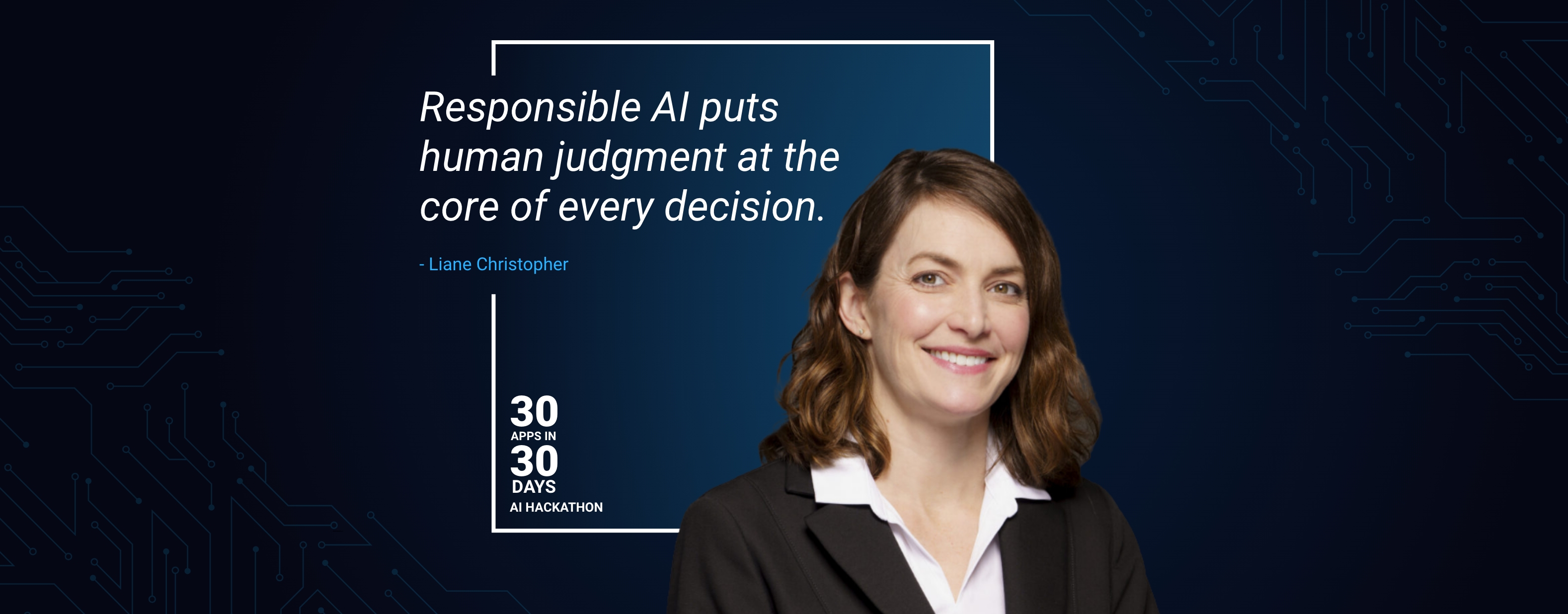
For me, that was the defining lesson from the hackathon: responsible AI starts with a deep understanding of the scenarios, workflows, and decisions it is meant to support. The goal isn’t to remove people from the process, but to support key data points sooner, provide better context and ensure that critical decisions remain guided by human judgment.
That is what I hope Sky Health Bridge can become: a practical way to turn complex data changes into clear, reviewable, and accountable decisions.
About the Author
Liane Christopher is the Vice President, Portfolio Operations and Growth at Sky Solutions. She leads critical programs within the Department of Health and Human Services (HHS) at the Centers for Medicare & Medicaid Services (CMS) and the Office of National Coordinator for Health Information Technology (ONC). Under her leadership, Sky Solutions consistently delivers high-quality, agile solutions, achieving top CPARs and transformative outcomes for customers.